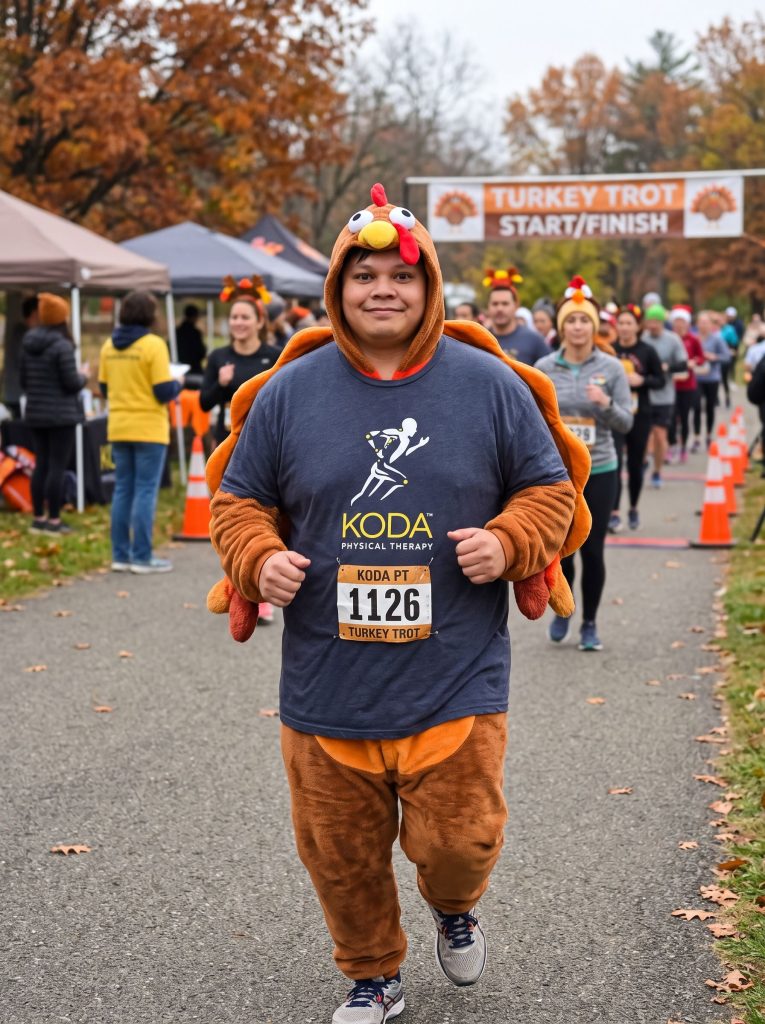
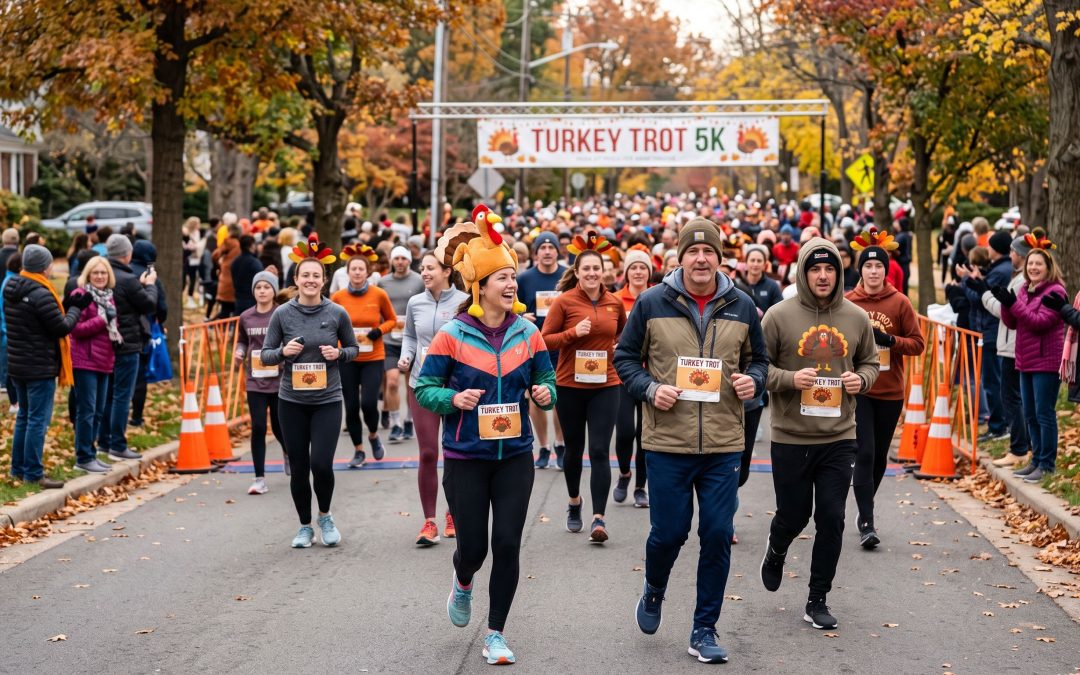
Let’s be honest about how you ended up here. Your sister signed you up “as a fun family thing to do.” Or your coworker said “it’s just a 5K, it’ll be easy” (it will not be easy, Karen). Or maybe you saw the matching turkey hats in the group chat and your competitive side kicked in before your common sense could stop you.
Whatever got you into this Turkey Trot, here you are — probably Googling “how not to die during a 5K” at 11pm a week before the race. We see you. And we’ve got you.
You don’t have to be a runner to survive — and actually enjoy — your Turkey Trot. You just have to prep smart. Let’s talk about how.
Why the Turkey Trot Is the Perfect Excuse to Start Moving (Even If You’re Not a “Runner”)
Here’s a secret: almost nobody lining up at a Turkey Trot is a “real runner.” Most people there are exactly like you — moving their bodies because a holiday tradition gave them a reason to, not because they dream in mile splits.
That’s what makes this event so great. It’s low-pressure, high-energy, and wrapped in a built-in excuse to get outside, breathe some crisp November air, and move before you sit down to a plate of mashed potatoes you have zero intention of feeling guilty about.
You don’t need a race history. You don’t need matching gear (although the turkey hat is strongly encouraged). You just need a body that’s ready to go the distance — and that’s exactly what we’re going to help you set up.
The Biggest Mistake First-Timers Make Before Race Day
Ready for the number one mistake we see? Doing too much, too fast, too close to race day.
People panic a week out, decide they need to “get in shape,” and suddenly attempt three runs in four days after months (or years) of minimal activity. That’s not training — that’s an injury waiting to happen.
Your body adapts to new movement demands gradually, not overnight. Tendons, muscles, and joints need time to build tolerance to the repetitive impact of running or brisk walking. Cramming right before race day doesn’t build fitness — it builds soreness, fatigue, and a serious risk of tweaking something right when you need your body to cooperate most.
The fix? A little consistent movement in the days leading up to the race beats a frantic sprint toward “readiness.” More on that below.
Running Mechanics 101: What Your Body Should Actually Be Doing
You don’t need a biomechanics degree to run a 5K, but understanding a few basics can make the experience smoother (and safer):
Posture: Stand tall, shoulders relaxed, eyes forward — not glued to your feet.
Arm swing: Let your arms move naturally front-to-back, not across your body. This helps with rhythm and efficiency.
Foot strike: Aim to land with your foot roughly underneath your body, not way out in front. Overstriding is one of the most common causes of shin and knee discomfort in new runners.
Cadence: Shorter, quicker steps tend to feel smoother and put less strain on your joints than long, heavy strides.
You don’t need to overthink this mid-race. Just check in with yourself occasionally: Am I tense? Am I overstriding? Are my shoulders up by my ears? Small corrections go a long way.
Prep Work: What to Do in the Days Leading Up to the Race
This isn’t about cramming — it’s about priming your body to feel good on race day.
3-5 days out: Take a couple of easy walks or light jogs to keep your legs loose without fatiguing them.
2 days out: Hydrate well. Dehydration sneaks up on people and shows up as cramping or fatigue.
The day before: Rest. Seriously — this is not the day to “squeeze in one more workout.”
Sleep: Prioritize a good night’s sleep two nights before the race (the night right before is often restless due to nerves — that’s normal).
3 Easy Stretches to Loosen Up Before You Run
You don’t need a 45-minute warm-up routine. These three moves hit the muscles that matter most:
Leg Swings – Hold onto something stable and swing one leg forward and back, then side to side. This loosens your hips and hamstrings.
Walking Lunges – A few gentle lunges wake up your glutes and quads without overtaxing them.
Calf Raises – Rise up onto your toes and lower slowly. This primes your calves and ankles for the repetitive impact ahead.
Do these for 5-10 minutes before the race starts. Your body will thank you at mile two.
Shoes Matter More Than You Think — Here’s Why
Your shoes are the single most important piece of equipment you’ll use on race day — more important than your playlist, your hydration belt, or your lucky socks.
Worn-out or ill-fitting shoes change how your foot strikes the ground, which can throw off your entire movement chain — ankles, knees, hips, even your lower back. This is one of the most common (and most preventable) causes of race-related aches and pains.
How to Know If You’ve Got the Right Shoe for Your Foot
A few quick checks:
Flex test: The shoe should bend where your foot naturally bends (at the ball of the foot), not in the middle of the arch.
Wiggle room: You should have about a thumb’s width of space between your longest toe and the end of the shoe.
Age check: If your shoes are more than 300-500 miles old (or several years old and rarely used), it’s time for new ones — the cushioning breaks down even if the tread looks fine.
Comfort over hype: The “best” running shoe is the one that feels right for your foot, not the one your cousin swears by.
Race Day Tips: Pacing, Breathing, and Staying Injury-Free
Start slow. The adrenaline at the starting line makes everyone sprint the first quarter mile. Don’t fall for it. Ease in.
Breathe rhythmically. Try inhaling for two steps, exhaling for two steps. It keeps your pace steady and your nerves calm.
Walk breaks are not failure. Run-walk strategies are smart, effective, and used by plenty of seasoned racers — not just beginners.
Listen to your body. Mild muscle fatigue is normal. Sharp pain is not.
What To Do If Something Feels “Off” Before or After the Race
If you feel pain that’s sharp, sudden, or localized to a joint — stop and assess. Mild soreness after a new activity is expected. Pain that lingers, worsens, or limits your movement a few days later is your body telling you something needs attention.
Don’t push through it and hope it resolves on its own. A quick evaluation now can prevent a much longer recovery later.
You Don’t Have to Be a Runner to Finish Strong
You don’t need fancy gear, a training app, or a “runner’s body” to cross that finish line. You need a reasonable plan, a little preparation, and the willingness to show up — turkey hat optional, but encouraged.
Whether you run, walk, jog-shuffle, or do some hybrid version of all three, you’re going to finish. And that pie? You’ll have earned every single bite.
This blog is for educational purposes and is not a substitute for personalized medical or physical therapy advice. If you’re experiencing pain or have concerns about an injury, please consult a licensed physical therapist or healthcare provider.
Move smarter. Recover stronger. Happy Trotting, Koda family.