
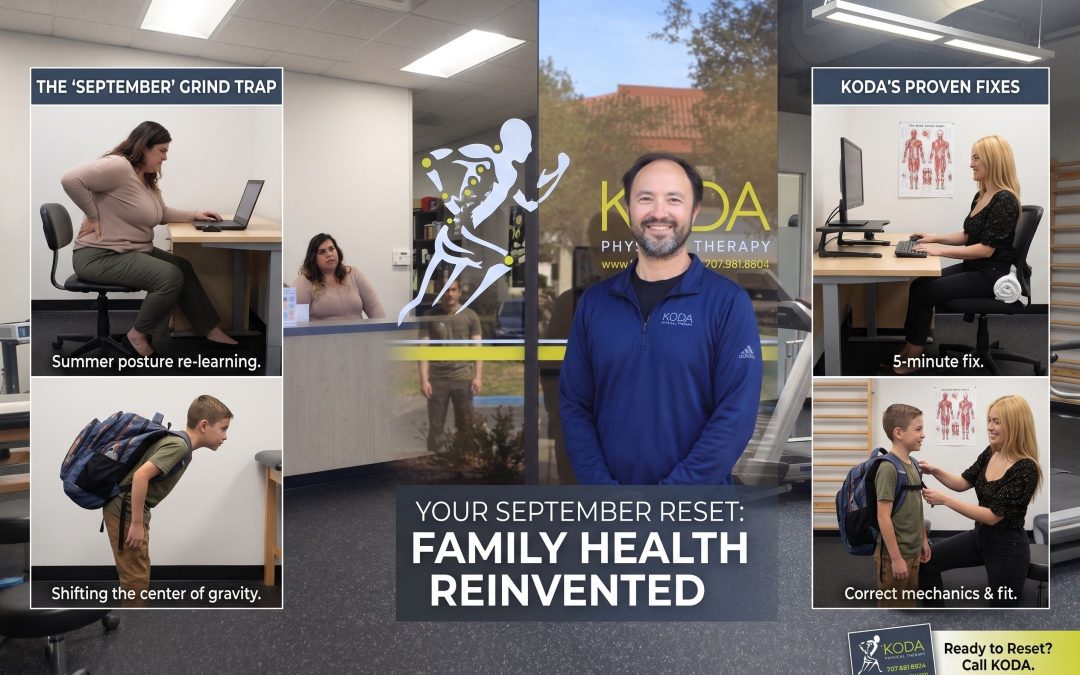
The September Reset: Backpack Safety Tips for Kids & Desk Setup Tips for Parents Returning to the Office Grind
Let’s be honest: somewhere between the last pool day and the first “where are my shoes?!” morning, summer just… ends. One day you’re all sunscreen and flexible bedtimes, and the next you’re back to alarms, lunch packing, and remembering how to sit at a desk for eight hours without your lower back staging a full rebellion.
Here’s a family health secret nobody talks about: September is the real New Year’s Day.
Forget January 1st. That’s a made-up deadline shivering in the middle of winter. September is when routines actually reset; school starts, work ramps back up, and everyone’s body has to relearn habits it happily forgot over the summer. Your kid’s spine is adjusting to a backpack again. Your spine is adjusting to a desk chair again. And honestly? Neither of you is fully ready.
So let’s fix both problems in one shot, because in most houses, nobody’s just dealing with the kid’s backpack or just dealing with their own desk setup — you’re dealing with both, usually while making a sandwich and looking for a missing shoe at the same time.
The Backpack Problem Nobody Talks About
Backpacks get blamed for a lot of dramatic things — “it’s ruining my child’s posture!” — but the real issue is more mechanical and much more fixable than people think.
Here’s the science in plain English: when a backpack is too heavy or worn incorrectly, it shifts your child’s center of gravity backward. To compensate, kids lean forward at the hips or crane their neck forward. Do that every day, for months, and you get compensatory movement patterns — fancy talk for “the body finds a workaround that isn’t great long-term.”
The three real culprits:
Weight — Backpacks should stay under roughly 10-15% of a child’s body weight. Once it creeps past that, the spine takes the hit.
Fit — A pack that hangs low or sits loose forces kids to arch or lean to keep it stable.
Wear position — The one-shoulder “cool kid” sling? It’s basically an invitation for uneven shoulder loading and muscle imbalance.
None of this is scary. It’s just mechanics. And mechanics can be adjusted.
The Backpack Test You Can Do Tonight (Seriously, Try This)
You don’t need special equipment. Just five minutes and your kid’s actual backpack, fully loaded like a normal school day.
Weigh it. A bathroom scale works fine. Compare it to your child’s body weight.
Check the fit. The bottom of the pack should rest at hip level — not sagging down near the tailbone.
Watch them walk. Have your child walk normally across the room wearing it. Look for forward head lean, hunched shoulders, or a noticeable forward tilt at the waist.
Check the straps. Both shoulders engaged, straps snug (not choking), and if there’s a hip or chest strap — use it. It’s not just for hikers.
If something looks off, it usually is. Trust your eyes here.
Signs Your Child’s Backpack Is Already Hurting Them
Kids won’t always say “my thoracic spine feels compressed.” They’re more likely to say nothing at all or complain about things that don’t sound backpack-related.
Watch for:
-Red marks or indentations on the shoulders after school
-Complaints of neck, shoulder, or back tightness in the evening
-Leaning forward noticeably while walking with the pack on
-Numbness or tingling in the arms (a sign of nerve compression from straps)
-Avoiding the backpack altogether (“can you just carry it, Mom?”)
Catching these early means a quick fix. Ignoring them means a habit pattern that’s harder to unwind later.
The Parent Trap: From Summer Movement to 8 Hours at a Desk
Now let’s talk about the other half of the household — you.
Summer, even a busy one, usually involves more incidental movement: chasing kids at the pool, standing at BBQs, walking around at day camp pickup, generally not being glued to a chair. Then September hits, and suddenly you’re back at a desk for eight hours a day, often in a chair that has seen better decades; we call it “the chair that time forgot.”
Your body notices. Hips get tight from sitting. Shoulders round forward toward the keyboard. Low backs complain about the sudden lack of movement. This isn’t dramatic injury territory. It’s cumulative strain, and it sneaks up fast when you go from active to sedentary in one weekend.
Quick Desk Setup Fixes That Take 5 Minutes
You don’t need a $900 ergonomic overhaul. You need five minutes and a little intention.
–Monitor height: Top of the screen at eye level. If you’re looking down at your laptop all day, prop it up and use an external keyboard.
–Chair height: Feet flat on the floor, knees roughly level with hips.
Elbow angle: Around 90 degrees when typing, arms relaxed, not reaching.
–Lumbar support: A rolled towel or small cushion in the low back curve makes a bigger difference than people expect.
–Screen distance: Roughly an arm’s length away to reduce neck strain.
Five minutes tonight. Genuinely worth it.
The “Movement Snack” Idea
Here’s a concept we love: movement snacks — small, frequent bursts of motion throughout the day, for both kids and parents.
For your kid: a quick stretch break between homework subjects, or standing up during reading time.
For you: standing up every 30-45 minutes, rolling your shoulders, walking to refill your water, or doing a quick hip stretch between meetings.
It’s not about a full workout. It’s about interrupting long periods of stillness before they turn into stiffness.
Building a Family Habit: Make It a Team Effort
Ergonomics sticks better when it’s not a lecture, it’s a shared thing. Do the backpack test together. Set a “stand up and stretch” reminder that goes off for the whole family. Let your kid catch you doing your desk stretches; they’ll copy it without you saying a word.
When to Stop Guessing and Get a Professional Opinion
If backpack adjustments aren’t helping, if your child’s discomfort persists, or if your own desk-related aches aren’t resolving with basic fixes, that’s your cue. Persistent pain isn’t something to power through or guess your way around.
This blog is for general education and isn’t a substitute for personalized medical advice. If you or your child are experiencing ongoing pain, please consult a licensed healthcare provider.
Koda’s Role This Fall
At Koda Physical Therapy, we help the whole family move smarter this season, whether that’s assessing your child’s movement patterns, fine-tuning your desk setup, or addressing pain before it becomes a bigger problem. Evidence-based care, real-world results, zero guesswork.