“I’ve Tried Everything” — We Hear This More Than You’d Think
If you’re reading this, chances are you’ve already done the responsible things. You rested. You iced it. Maybe you got a cortisone shot that worked for three glorious weeks before the pain crept back in like it never left. Maybe your doctor mentioned surgery, and your stomach dropped a little.
You’re not imagining it, and you’re not doing anything wrong. Chronic pain from plantar fasciitis, tennis elbow, Achilles tendinopathy, and other stubborn tendon issues is notoriously resistant to the “standard” first-line treatments. That’s not a reflection of your effort — it’s a reflection of how these injuries actually behave in the body.
Here’s the part most people never get told: rest and cortisone don’t fix the underlying problem. They just mute it for a while.
Why Your Body Sometimes Needs a “Jolt” to Heal
Chronic tendon pain is often less about ongoing inflammation and more about tissue that has gotten “stuck.” Think of it like a scar that never quite finished healing — the body treated the injury as resolved and moved on, even though the tissue underneath is still disorganized, weak, and under-supplied with blood flow.
Rest doesn’t fix this. In fact, too much rest can make it worse, because healing tissue needs stimulation to remodel correctly. Cortisone, meanwhile, calms inflammation but does nothing to address the structural issue — which is why the relief is temporary.
What chronically stalled tissue actually needs is a signal strong enough to tell the body: “Hey — this area needs attention. Start the repair process again.”
That’s the jolt. And it’s exactly what shockwave therapy is designed to deliver.
What Shockwave Therapy Actually Does (No Jargon, Promise)
Forget the complicated science-speak for a second. Here’s shockwave therapy in plain English:
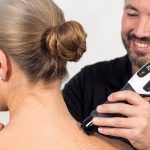
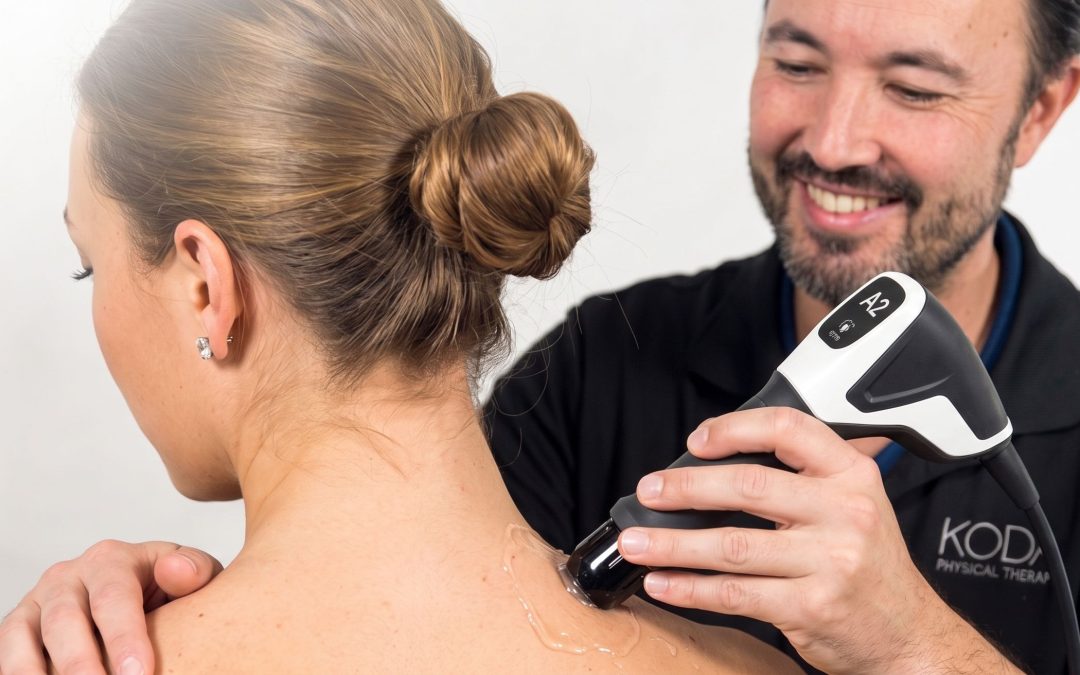
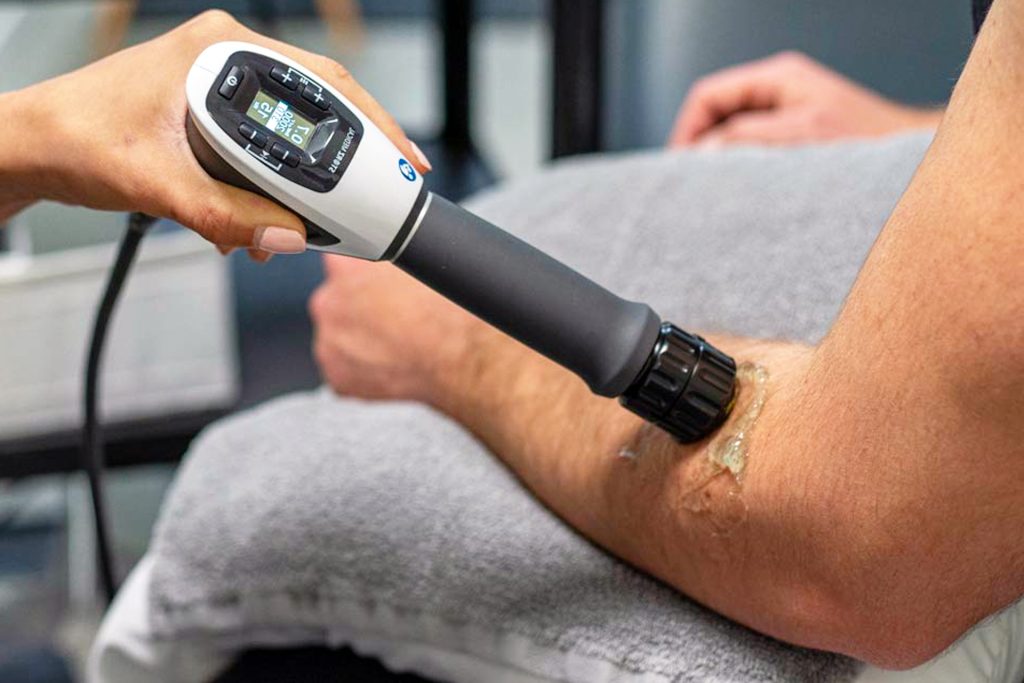
It wakes up blood flow. Acoustic pulses are delivered directly to the injured tissue, increasing circulation to an area that has likely been under-supplied for months — sometimes years.
It triggers your body’s natural repair response. The energy from each pulse essentially tells your cells to “restart” the healing process, prompting the production of new, healthier tissue instead of the disorganized, scarred tissue that’s been causing pain.
It calms the chronic inflammation cycle. Rather than masking inflammation the way cortisone does, shockwave therapy helps reset the inflammatory response so your body can actually move through the healing stages it got stuck in.
In short: shockwave therapy doesn’t quiet your pain. It restarts your healing.
Enter EMTT: If Shockwave Is the Spark, EMTT Is What Keeps the Fire Burning
Shockwave gets the repair process moving — but healing isn’t a one-moment event. It’s a process that needs to be sustained.
That’s where EMTT (Extracorporeal Magnetotransduction Therapy) comes in.
EMTT uses electromagnetic energy to reach deep into tissue — including areas shockwave can’t access as easily, like deep tendon insertions or joint-adjacent structures — and enhances cellular activity at a mitochondrial level. In practical terms: it helps your cells produce more energy, which means they can repair tissue faster and more efficiently.
Where shockwave creates the initial disruption that restarts healing, EMTT supports and sustains that healing by reducing inflammation and boosting cellular metabolism over the following days.
Shockwave lights the match. EMTT keeps the fire burning long enough for real repair to happen.
Why Koda Uses Both — The 1-2 Punch Most Clinics Don’t Offer
Many clinics offer shockwave alone. Few offer the combination approach, and even fewer have the clinical experience to know when, how, and in what sequence to apply both technologies for maximum benefit.
At Koda, we pair shockwave and EMTT because chronic tendon and fascia issues typically need both the initial stimulus and the sustained cellular support to truly resolve — not just quiet down for a few weeks.
This is evidence-based care for real-world results, not a one-size-fits-all protocol.
What a Session Actually Feels Like
No needles. No incisions. No downtime.
Most patients describe shockwave therapy as an intense, rhythmic pressure or tapping sensation — uncomfortable in the moment for some areas, but tolerable, and over in minutes. EMTT, by contrast, is painless and often described as simply feeling warm or producing a mild, pleasant buzzing.
You walk in, you walk out, and you go about your day. No surgery recovery. No crutches. No missed work.
A Local Story (Details Changed to Protect Privacy)
One of our patients — a Santa Rosa resident in his mid-50s — had dealt with Achilles pain for over a year. He’d tried rest, two rounds of cortisone, and physical therapy focused solely on stretching. Nothing stuck. He was told surgery might be his “only option left.”
After a course of combined shockwave and EMTT sessions at Koda, paired with targeted strength work, his pain dropped significantly within six weeks — enough that he returned to hiking Sonoma County trails pain-free, something he hadn’t done in over a year.
This isn’t a guarantee of identical results for every patient — everybody heals differently — but it’s a realistic example of why this approach is gaining traction locally.
The Common Mistake: Waiting Too Long
The biggest mistake we see isn’t trying the wrong treatment — it’s waiting too long to try the right one. Chronic tendon issues don’t resolve well with time alone, and many patients wait months (sometimes years) assuming surgery is their only “real” next step once conservative treatment fails.
Surgery has its place. But it should be a last resort, not a default — especially when non-invasive, evidence-based options haven’t been fully explored.
Why Sonoma County Trusts Koda With This
This isn’t an experimental gadget we picked up because it sounded trendy. Shockwave and EMTT technologies are used by clinics, sports medicine programs, and physical therapists worldwide, backed by real physiological mechanisms — not hype.
What sets Koda apart locally is combining both technologies thoughtfully, within a broader plan that includes movement assessment, strength training, and education — because technology works best when it’s paired with expertise, not used in isolation.
Technology-driven therapy. Human-focused results.
Wondering If You’re a Candidate?
If you’ve been dealing with nagging tendon or fascia pain that hasn’t responded to rest, ice, or cortisone — you may be exactly the kind of patient who benefits most from this approach.
This blog is for educational purposes and does not replace individualized medical advice. Results vary by patient and condition.
Your next step doesn’t have to be surgery — let’s explore your options first.