Knee Pain: Myths, Facts, and What Actually Helps
Knee pain is extremely common, but it is not an unavoidable part of aging. Many people are told to rest, rely on injections, or jump straight to surgery. In reality, many knee conditions improve with the right combination of smart movement, physical therapy, and modern regenerative therapies.
Understanding the myths around knee pain can help you make more confident decisions about your recovery.
Why Knee Pain Myths Spread So Easily
If you’re over 40 and your knees hurt, you’ve probably heard advice like:
“It’s just age.”
“You should stop running or exercising.”
“You’ll eventually need surgery.”
Add an MRI report that mentions words like degeneration or bone-on-bone, and it’s easy to assume nothing can be done.
But knee pain is rarely caused by one thing alone. It often involves a combination of strength deficits, movement patterns, inflammation, past injuries, and activity levels. When those factors are addressed correctly, many people improve significantly.
Myth #1: Knee Pain Is Just Part of Aging
Aging changes our joints, but ongoing pain is not inevitable.
Research shows many adults have arthritic changes on imaging without any symptoms. Pain is influenced by factors such as:
Muscle strength
Joint mobility
Movement patterns
Activity levels
Inflammation
Physical therapy focuses on improving the things that can actually be changed, like strength, mobility, and how the body moves.
You may not have the knees you had at 20—but you can absolutely build stronger, more capable knees than you have today.
Myth #2: Rest Is the Best Treatment
When knee pain flares up, many people stop moving completely.
Short-term rest can calm irritation, but long-term inactivity often makes knees worse.
The muscles around the knee—especially the quadriceps, hamstrings, and glutes—help absorb load and stabilize the joint. When those muscles weaken, the knee experiences more stress.
Guided movement helps:
Improve circulation and tissue healing
Restore joint mobility
Strengthen the muscles supporting the knee
Reduce pain sensitivity
The key is moving smarter, not simply moving less.
Myth #3: Surgery or Injections Are the Only Options
Many people assume knee pain inevitably leads to surgery.
However, major orthopedic and physical therapy guidelines recommend conservative treatment first for many knee conditions, including:
Osteoarthritis
Kneecap pain (patellofemoral pain)
Tendon injuries
Overuse conditions
Effective care may include:
Individualized strengthening programs
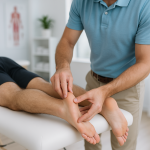
Hands-on therapy
Movement retraining
Education on activity modification
Regenerative Therapy Options
For stubborn cases, newer regenerative technologies can help support healing.
At Koda Physical Therapy, we may incorporate treatments such as:
Shockwave Therapy
A non-invasive treatment that delivers acoustic energy to injured tissue. It can stimulate circulation, trigger cellular repair processes, and help restart stalled healing.
EMTT (Electromagnetic Transduction Therapy)
High-energy electromagnetic pulses that stimulate cellular metabolism and support tissue recovery.
When combined with targeted strengthening and physical therapy, these therapies can help accelerate recovery and reduce chronic pain without injections or surgery.
Real Stories: What Recovery Can Look Like
While every person is different, many patients improve significantly with conservative care.
The Active Walker in Her 60s
One patient loved her daily three-mile walks but began experiencing persistent knee pain. She was told it was “just arthritis” and cut her walking distance in half.
During her assessment we identified weak hip muscles, limited ankle mobility, and movement patterns that overloaded the knee.
With targeted strengthening, manual therapy, and adjustments to her walking mechanics, she gradually returned to her routine and was walking comfortably again within a few months.
The Weekend Pickleball Player in His 40s
Another patient developed sharp knee pain while playing pickleball and climbing stairs. Imaging showed mild degeneration, which made him worry surgery might be inevitable.
Instead, treatment focused on improving hip strength, ankle stability, and knee alignment during movement.
After progressive strengthening and load management, he returned to playing pickleball regularly with only occasional mild soreness.
The Runner With Chronic Tendon Pain
One patient in his early 50s had been dealing with persistent knee pain for over a year. Running, hiking, and even downhill walking had become uncomfortable. Traditional therapy helped somewhat, but progress had plateaued.
We incorporated shockwave therapy and EMTT alongside a progressive strengthening program to stimulate healing in the irritated tendon.
Over several weeks, pain gradually decreased and his tolerance to loading improved. Within a few months he returned to running short distances and hiking again without the constant flare-ups that had been limiting him before.
Signs You Should Have Your Knee Evaluated
Consider a professional evaluation if:
Pain lasts longer than 10–14 days
Walking, stairs, or sleep are affected
Your knee locks, catches, or gives way
Swelling keeps returning
You’ve started avoiding activities you enjoy
Early treatment often means faster recovery and fewer interventions.
Want to Learn More?
If knee pain is limiting your activity, there are often more options than people realize.
We’re hosting a free educational Knee Pain Workshop where you’ll learn:
Why knees really start to hurt (beyond “just aging”)
Which movements help—and which to modify
How physical therapy and regenerative treatments may help recovery
Ways to stay active without making your knee worse
Move smarter. Recover stronger
Reserve your spot:
📞 Call 707-981-8604
Click Link to register
Work Shop Registration