Knee Injuries
Meniscus Tears
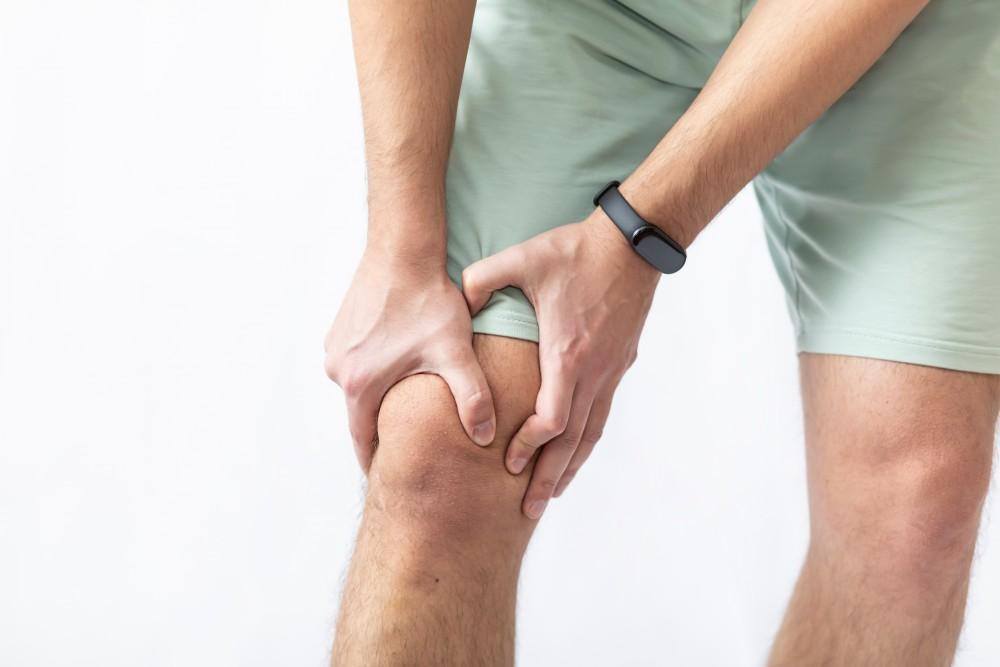
Each of our knees have a medial and lateral crescent shaped meniscus made out of fibrocartilage. They function sort of like rubber washers. The menisci have important anatomical and biomechanical functions, including load sharing, stabilizing, shock-absorbing, and lubrication. A meniscus tear is one of the most common acute sports injuries among younger individuals. This is often a traumatic injury sustained during pivoting or landing from a jump. However, in older individuals, non traumatic, degenerative tears are more common. One may experience pain, clicking, catching, or locking of their knee. Surgery to repair or remove the meniscus has been one of the most common orthopedic surgeries. However, recent studies have changed how we approach meniscus tears these days.
First of all, research has shown that symptoms and tears do not have a cause and effect relationship. So all of those symptoms I just mentioned above may be seen in a variety of different knee issues, such as an ACL tear, or arthritis.
Secondly, meniscus tears are present in many asymptomatic individuals. One study showed that in 230 knees of individuals with no knee pain, 30 percent had meniscal tears. This, of course, brings into question the efficacy of doing surgery.
This brings me to my third point, that surgery has similar outcomes to physical therapy. Several studies have been published recently that show that over time, there is no difference between individuals who have surgery and those who have placebo surgeries or physical therapy. In fact, having a menisectomy where they cut out a portion of the injured meniscus may even predispose you to more osteoarthritis later in life. Of course, for some younger patients under 40 years of age who have a severe traumatic meniscus injury, surgery may provide greater improvement in the short term. In the long term, however, no matter what your age, exercise can be just as effective as surgery. That being said, there is one type of tear that requires surgery: a bucket handle tear. In this situation, the torn flap has a tendency to flip over, causing the knee to lock in position resulting in severe pain and the inability to straighten or bend the knee.
With or without surgery it can take a long time to heal, anywhere from 6 to 12 months. There are two reasons that the healing environment is poor: 1) the meniscus does not get good blood supply and 2) the meniscus tissue is loaded every time you stand and put weight through the legs. So it may not be easy or quick, but it is possible to heal your meniscus without surgery, injections or pain medications as long as you do the right things.
The following 3 exercises are designed to help reduce compression/irritation of the meniscus, restore pain free range of motion, and improve blood/joint fluid flow within the joint. These are to be performed as a progression so all of them are to be done one right after the other and they shouldn’t take you more than 10 minutes to complete.
1) Tailgate swings: Find a spot where you can sit with your feet dangling (i.e. a tall stool or stable table. Gently swing your legs back and forth. Because the meniscus tissue does not have a good blood supply it relies on the fluid at the inside of the joint to provide some nutrition. This is a good way to get the fluid flowing within the joint without having compression or increased pressure when weight bearing. Perform for up to 5 minutes.
2) Tibial rotations: lie on your back with the knee bent and heel on the table/floor. Using the heel as a pivot point, rotate the tibia (the long bone in the lower leg) from side to side. Try to do this while keeping your knee still. Perform for roughly 1 minute. In some cases when meniscus injuries are more severe or acute, going all the way in or all the way out might be a little bit tender so just go as far as you can without significant pain. This is important in freeing up any potential restrictions within the knee.
3) Knee flexion with tibial internal rotation: this exercise can be done sitting or while lying on your back. First, you will turn your lower leg and toes inward (which tends to be the most common direction of restriction), then actively bend the knee as far as possible without sharp pain. Hold for 10 seconds, then slowly release. You will repeat this 10 times.
Ideally you will want to do these exercises several times daily. However, you could be doing these every 2 hours just to get swelling and pain under control in more acute cases.
There are many steps to recovering from a meniscus injury. The exercises mentioned above are just the beginning. Once you have been able to reduce your pain and restore mobility the next steps will be to build up strength in the quadriceps, hamstrings, hips and ankles. From there, you will restore balance and proprioception throughout the leg on stable and unstable surfaces (i.e. BOSU balls and wobble boards). And finally, we restore speed and power with plyometric exercises to get you ready for movements specific to your favorite sports and activities whether it’s basketball, gardening, or hiking with your grandchildren. No matter what stage you are in with respect to the healing process, we are here to help in any way possible to get you back to doing the things you love.