
Shockwave Therapy
Radial & FocusedShockwave Therapy in Petaluma California
Permanent Relief for Chronic Pain & Sports Injuries
At Koda Physical Therapy, we don’t just mask your pain—we fix the root cause. Shockwave Therapy (also known as Extracorporeal Pulse Activation Technology or EPAT) is an FDA-cleared, non-invasive treatment that uses acoustic pressure waves to stimulate deep healing within your muscles, tendons, and soft tissues.
By triggering a cascade of biological responses—including enhanced blood flow, cellular recruitment, and increased collagen production—Shockwave Therapy provides a scientifically proven path to recovery for patients across Sonoma County who want to avoid surgery or injections. – helping you move, recover, and feel better faster.
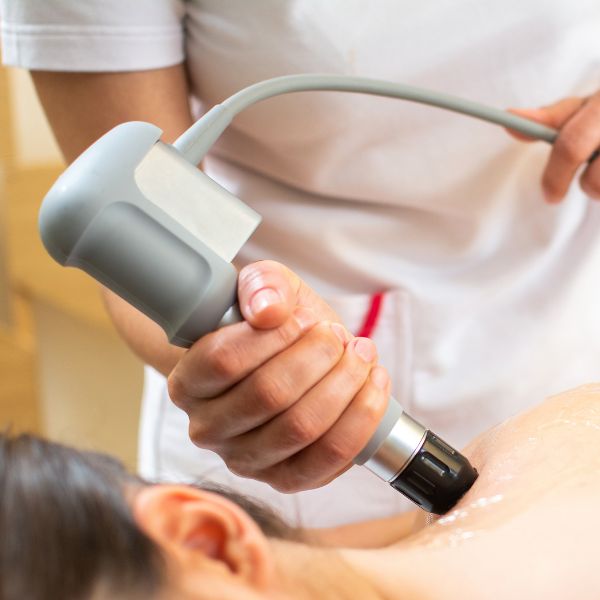
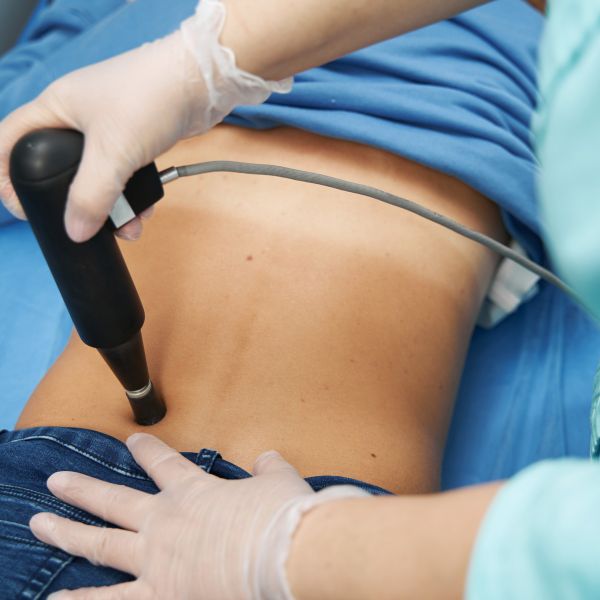
Radial versus Focused wave therapy
What is best for you?
We are one of the few clinics in the North Bay to offer both technologies, ensuring a truly customized treatment plan.
-
Radial Shockwave Therapy (EPAT): Distributes energy outward over a broader area. This is the “Gold Standard” for superficial muscle soreness, tension, and overuse strains across larger muscle groups.
-
Focused Shockwave Therapy (ESWT): Delivers high-intensity energy concentrated at a precise point. Because it reaches much deeper tissue layers, it is essential for chronic tendon injuries, calcified deposits, and bone stress conditions.
Who Can Benefit?
Our Petaluma patients use Shockwave Therapy to treat a broad range of musculoskeletal issues. Whether you are a local athlete or dealing with the wear-and-tear of daily life, we see high success rates with:
-
Heel Pain & Plantar Fasciitis (Our most common request)
-
Achilles Tendinopathy
-
Tennis & Golfer’s Elbow
-
Rotator Cuff & Shoulder Pain
-
Shin Splints (Medial Tibial Stress Syndrome)
-
Hip Pain (Greater Trochanteric Pain Syndrome)
Whether you’re a weekend warrior, a professional athlete, or simply dealing with chronic pain from everyday activity, shockwave therapy can offer a path to renewed mobility, strength, and comfort.
What To Expect from shockwave Therapy And How It Helps
Because the therapy stimulates the body’s own repair mechanisms, it often leads to tissue regeneration – building healthier collagen fibres, promoting new blood vessel formation, and easing inflammation.
Most people start to feel improvement within a few weeks. Some notice immediate relief, but the full benefit often develops over several sessions as the body gradually remodels and heals. Compared to surgery or long courses of injections, recovery is swift – many patients can walk, work and return to day-to-day tasks almost immediately after a session.
Why Choose Shockwave Therapy?
- It addresses the root problem – not just pain symptoms – promoting real tissue repair.
- It is non-invasive, safe, and can be adjusted to suit your condition and pain tolerance.
- It reduces recovery time and may help you avoid more invasive treatments like surgery or long-term medication.
- Suitable for both deep, chronic issues (with Focused ESWT) and wider, superficial muscle or soft tissue discomfort (with Radial ESWT).
- Offers a valid evidence-based option for stubborn musculoskeletal issues where other treatments may have failed.
If you are struggling with persistent tendon, muscle or joint pain – or a recurring sports-related problem – Shockwave Therapy could be the missing link to lasting recovery. Speak to a clinician to find out whether Radial, Focused, or a combined approach is right for your needs.
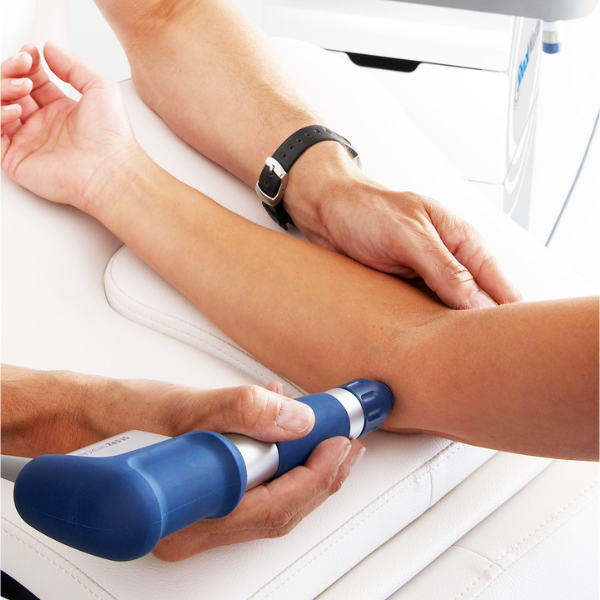
Shockwave Therapy vs Ultrasound: What’s the difference?
Many patients ask how this differs from traditional ultrasound. While both use sound waves, the physics are very different:
-
Ultrasound: Uses regular vibrations that create heat within the tissue.
-
Focused Shockwave: Uses a single, high-intensity pressure pulse with a wide range of frequencies. It does not raise tissue temperature, making it safer and more effective for triggering the regenerative “healing cascade” in deep tissues.
What Can EPAT/ESWT Be Helpful With?

Achilles Tendinopathy
Repetitive minuscule injuries and tears to the tendon fibers take an enormous toll on the Achilles tendon and the athlete enduring the injury. Athletes who suffer from Achilles tendinopathy may experience pain, swelling, stiffness, and limited mobility.
Using Extracorporeal Shockwave Therapy for Achilles tendinopathy is exceptionally effective. Explore the evidence to see how you can help athletes in your care score functional gains – quickly and efficiently; read this study.

Tennis or Golfers Elbow
Lateral epicondylitis (Tennis elbow) and medial epicondylitis (Golfer’s elbow) are common inflammatory conditions triggered by repetitive motion. Both are prevalent among athletes, and they can benefit from shockwave therapy.

Stress Fractures
Bone stress injuries (BSI) frequently plague runners, and due to the associated prolonged time necessary away from sport, the toll it takes is physically and mentally impactful. And while the diagnosis is disheartening, shockwave offers new hope. “A recent retrospective study” by Alexander Beling, MD, Amol Saxena, DPM, Karsten Hollander, MD, and Adam S.Tenforde, MD, explores the effectiveness of ESWT in the management of BSI in runners.

Frozen Shoulder
People 40 and older, particularly women, or people who have had to keep their shoulder immobile (i.e. post-surgery) for an extended period, are more likely to have frozen shoulder. The severity of the frozen shoulder will dictate the approach to shockwave therapy. Although the jury is still out on the outcomes, EPAT will effectively address the broader area, and will treat the shoulder in a more focused manner.

Plantar Fasciitis
This inflammatory condition is commonplace in athletic populations and causes severe heel and arch pain; with particularly acute symptoms upon rising or taking that first step out of bed in the morning. The plantar fascia, which connects the heel bone to the toes, becomes inflamed and is exacerbated by overuse. This condition is excruciating and can sideline athletes because even standing and walking is difficult, never mind performing at a high level. Fortunately, the efficacy of Extracorporeal Shockwave Therapy for Plantar fasciitis is well-established and proven by multiple clinical trials and meta-analyses, and here’s one to explore.

Rotator Cuff Injuries
Rotator cuff injuries can be acute or chronic. Usually, the pain increases at night, and the presence of shoulder weakness is part of the symptom profile. Calcium deposits may also form on the shoulder tendon.
Strained Calves or Hamstrings
These injuries are high on the list of conditions among athletes of all ages, and published studies prove the efficacy of ESWT for both calf strains hamstrings

Shin Splints
Considered a painful condition, shin splints occur from inflammation in the muscles, tendons, and tissues surrounding the tibia. Also referred to as Medial tibial stress syndrome, it was one of 8 functional lower limb injuries explored in a study focused on the effectiveness of shockwave therapy, and it was determined that ESWT delivers multiple effects contributing to tissue healing and pain relief.

Hip Pain
Hip pain in athletes comes in many forms, and Extracorporeal Shockwave Therapy has been shown to greatly alleviate hip pain. https://pubmed.ncbi.nlm.nih.gov/19439758/
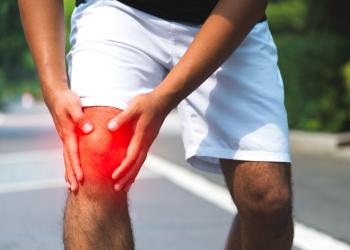
Jumper’s Knees
Another frequently seen overuse injury which can develop slowly over time and become chronic. The results are in – Extracorporeal Shockwave Therapy demonstrated greater effectiveness and safety compared to traditional conservative approaches to chronic patellar tendinopathy.
What Are the expected results from Shockwave Therapy?
Some patients report immediate pain relief after the treatment, although it can take up to four weeks for pain relief to begin. The procedure eliminates pain and restores full mobility, thus improving your quality of life. Over 80% of patients treated report to be pain free and/or have significant pain reduction.
Is Shockwave Therapy safe?
Yes. This FDA cleared technology was developed in Europe and is currently used around the globe. A wealth of medical experience, state-of-the-art engineering and optimal quality have been built into each EPAT device, and extensive clinical studies and tests have confirmed its safety and efficacy.
What is the duration of the treatment and how many treatments will I need?
Treatment sessions take approximately 10-15 minutes depending on the disorder to be treated. Generally, at least 3-5 treatment sessions are necessary at weekly intervals.
What are the possible side effects or complications?
The non-invasive EPAT/ESWT treatment has virtually no risks or side effects. In some cases, patients may experience some minor discomfort which may continue for a few days. It is normal to have some residual pain after intense exercise or a full day of work.
What if I have a special health condition?
The safety and effectiveness of the EPAT/ESWT procedure has not been determined on people with the following health conditions. Your doctor will provide you with information about how these and other conditions might affect the determination to perform the EPAT/ESWT procedures.
• Malignancies
• DVT (Deep Vein Thrombosis)
How is the treatment performed?
Coupling gel is applied to the treatment area of interest to enhance effectiveness. After these preparations, EPAT/ESWT pressure waves are released via the applicator moved over the area of interest in a circular motion.
Why consider non-invasive EPAT/ESWT?
EPAT/ESWT has a proven success rate that is equal to or greater than that of traditional treatment methods (including surgery) and without the risks, complications, and lengthy recovery time.
EPAT/ESWT is:
• Performed in your physician’s office/ clinic
• Does not require anesthesia
• Requires a minimal amount of time
Patients can:
• Bear weight (i.e. walk) immediately,
• Return to work/normal activities within 24-48 hours
• Resume strenuous activities after 4 weeks.
is EPAT/ESWT covered by insurance?
No. However, comparing the potential cost of EPAT (Extracorporeal Pulse Activation Technology)/ESWT (Extracorporeal Shockwave Therapy) with other treatment options for musculoskeletal ailments—including surgery, corticosteroid injections, PRP (Platelet-Rich Plasma therapy), and stem cell injections—requires considering several factors. These factors include the specific condition being treated, geographic location, provider rates, and insurance coverage.
EPAT (Extracorporeal Pulse Activation Technology)/ ESWT (Extracorporeal Shockwave Therapy)
- Cost Range: Patients might pay between $125 and $250 per session for EPAT/ESWT, with a typical course of treatment involving 3 to 5 sessions, totaling between $375 and $1,250.
- Insurance Coverage: EPAT is not covered by insurance, leading to out-of-pocket expenses for patients.
Surgery
- Cost Range: Depending on the surgery’s complexity, associated hospital fees, anesthesia, and post-operative care, costs can range from several thousand dollars to over $50,000.
- Insurance Coverage: Surgical treatments are frequently covered by insurance, though deductibles and copays can significantly affect out-of-pocket costs.
- Factors for rehab: Surgical intervention is invasive and often unwarranted for the conditions most commonly addressed with EPAT/ESWT. Furthermore, return to activity is typically much longer.
Corticosteroid Injections
- Cost Range: The cost for these injections typically ranges between $100 and $300 per injection, with some conditions requiring multiple injections.
- Insurance Coverage: Corticosteroid injections are usually covered by insurance, subject to deductibles and copayments.
- Factors for rehab: Corticosteroid injections may or may not assist in ones ability to progress with their rehab, have potentially detrimental effects on the surrounding tissues and do not aid in the healing of the injured tissue.
PRP (Platelet-Rich Plasma Therapy)
- Insurance Coverage: PRP therapy is not commonly covered by insurance plans, making it an out-of-pocket expense for most patients.
- Cost Range: PRP treatments cost between $500 and $2,500 per injection, with some conditions necessitating multiple treatments.
Stem Cell Injection
- Cost Range: Stem cell therapy is one of the more expensive options, with costs ranging from $2,000 to $10,000 per injection, depending on the type of stem cells used and the treatment’s complexity.
- Insurance Coverage: Like PRP, stem cell injections are typically not covered by insurance, representing a significant out-of-pocket expense.